
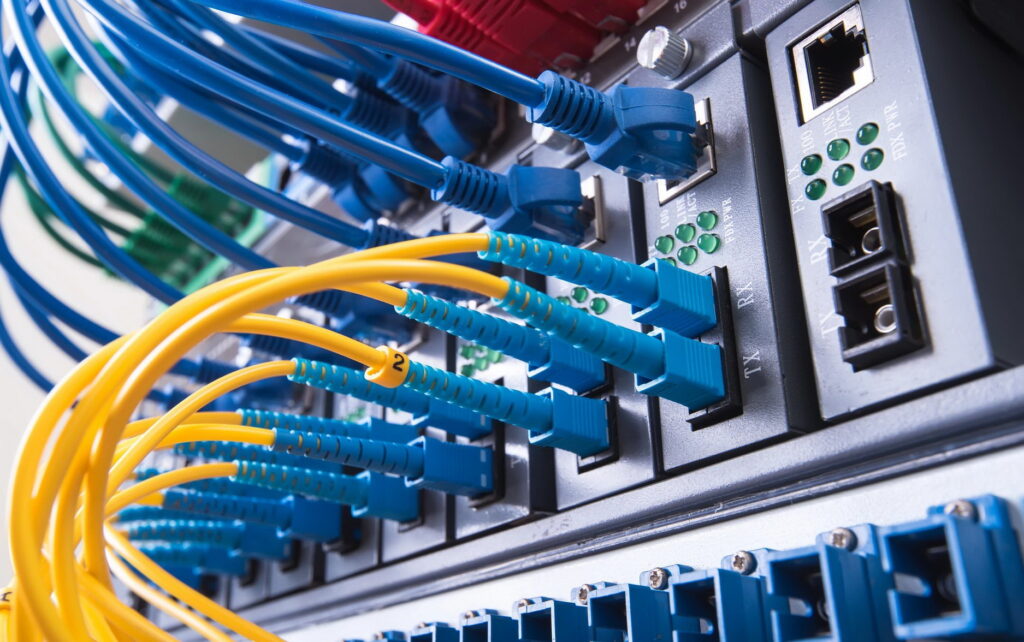
Security Network & Low-Voltage Infrastructure
Support cameras, controllers, intercoms, alarm communicators, monitoring, and security appliances with properly planned pathways, cabling, PoE, racks, and network coordination.
What this service covers
Coverage runs from rough-in through turnover: labeled runs, terminated racks, recorded test results, and as-built drawings handed to whoever administers the system afterward.
24/7 Security provides security network & low-voltage infrastructure across Central states. We can begin with a defined construction or rollout package, or help organize an incomplete scope before field work begins.
Typical scope
- Security-device copper and fiber cabling
- PoE switching and network-room coordination
- Wireless, cellular, and remote communications paths
- Testing, labeling, and as-built updates
Project deliverables
Port assignments, cable labels and test results are recorded as runs are terminated.
How the work moves forward
Each stage has an exit condition, so limited ceiling access is less likely to stall work.
Discover
Walk closets, risers and ceilings; note capacity and owners.
Define
Fix counts, cable types, mounting details, test methods and acceptance thresholds.
Deploy
Pull, terminate, mount and patch on an agreed access schedule.
Verify
Verify links, power draw and device reachability before signoff; rework failures.
Where this service fits
Infrastructure work can run ahead of a camera or access system award, or be bundled with the device installation itself.
- New commercial installations
- Expansion or standardization across multiple facilities
- Replacement of unsupported or unreliable systems
- Integration and operational improvement
Build a clearer scope
Share floor plans, closet photographs, switch models and the port counts you expect to need.
Network & Low-Voltage Support: decisions that change the scope
Security networks carry video, access, intercom, alarm and management traffic with different bandwidth, latency, power and security needs. Network service begins with the client standard and a responsibility matrix for switching, addressing, VLANs, firewall rules and remote administration.
What the survey and work plan must resolve
Settle the following before cable is ordered and before anyone commits to a cutover date.
Endpoint demand
Inventory devices, speeds, PoE classes, multicast, time and external services.
Switching and uplinks
Size ports, power, optics, backbone capacity and redundancy.
Segmentation
Coordinate VLAN, routing, firewall, certificates and least-privilege administration.
Operational handoff
Document ports, addresses, accounts, backups, monitoring and update ownership.
Completion evidence for network & low-voltage support
Labels on runs and devices match the record set, and anything holding administrative access transfers through the client’s approved custody process.
- Certified copper and fiber links
- Switch-port, PoE and uplink validation
- Representative device and management traffic
- Network records delivered through approved channels
Why is a site survey still needed?
Quantities shift once a walkthrough shows which pathways are reusable, which are full, and which spaces need after-hours access.
What should be available before scheduling?
Tell us how many endpoints each area needs, who owns the network, and what the closeout package must include.
Structured cabling cost, testing and contractor scope
This central planning guide supports clear proposals while 24/7 Security coordinates regional installation, commissioning, maintenance and repair.
Discuss installation, maintenance or service
Detailed guide maintained by 360TechnologyGroup.com, the parent-company knowledge center.