
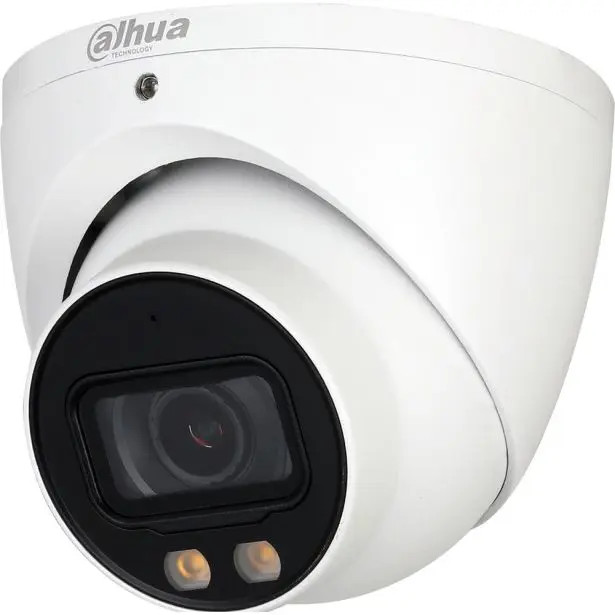
Dahua Equipment: US Restrictions, Installed Base and Migration Paths
Most Dahua questions are not about cameras. They are about whether a buyer is permitted to own the equipment, and what to do about units already mounted. That is this page’s subject. Coverage design and camera counts belong under video surveillance systems. This page stays on eligibility, the installed base, and the routes out.
The restrictions, stated accurately
Zhejiang Dahua Technology Co., Ltd. is a video surveillance manufacturer headquartered in Hangzhou, China. Several distinct US measures apply to it, routinely collapsed into one vague warning. They are summarized below; confirm current status before relying on any of them.
- Section 889 of the FY2019 NDAA. Names Dahua alongside Hikvision, Huawei, ZTE and Hytera, plus their subsidiaries and affiliates. Part (a)(1)(A) bars federal agencies from procuring the equipment; part (a)(1)(B), effective August 2020, bars agencies from contracting with an entity that uses it — the provision that reaches private companies.
- FCC action on previously authorized equipment (2026). In 2026 the FCC moved to prohibit the importation and marketing of covered equipment that had already received an authorization, and tightened the Covered List rules further. The Commission did not revoke authorizations for equipment already in service, and end users are not required to stop using, remove or replace equipment they already own. Verify the current position before purchasing or expanding.
- The FCC Covered List and the Secure Equipment Act. Since 2022 the FCC will not grant new equipment authorizations for covered Dahua equipment intended for public safety, government facilities, critical infrastructure or national security purposes, absent an approved company plan.
- Section 1260H. Zhejiang Dahua Technology appears on the Defense Department list of Chinese military companies, updated June 10, 2026. Direct departmental contracting with listed entities is barred from June 2026, extending to their goods and services from June 2027.
None of them requires a private business to tear out a lawfully installed Dahua system. That distinction matters: overstating it sells replacements nobody owes, and understating it puts a federal contract at risk.
Deciding whether it applies to you
Federal money reaches further into the Central U.S. than owners assume: defense and aerospace suppliers along the Illinois corridor, refinery, port and pipeline contractors around Houston, federally leased and grant-funded space in Kansas City, St. Louis and Indianapolis. If you hold or bid federal contracts or grants, or lease space to a tenant who does, 889(a)(1)(B) is a live clause in an agreement you have signed rather than a policy abstraction. For a private manufacturer, retailer or landlord with no federal exposure, it is not. Settling which you are comes before every other decision here. Buildings under government security systems start from the opposite presumption.
Identifying what is actually on the wall
Dahua’s range divides roughly three ways. WizSense is the volume AI line, built on the company’s own AI chip, doing human and vehicle classification. WizMind is the project-grade portfolio for heavier processing, metadata and specialized analytics. TiOC, for Three-in-One Camera, combines full-color night imaging, active deterrence by light and siren, and AI in one unit. Features marketed as AcuPick, Smart Dual Light and WizColor are not competing families; they appear across the lines and often run together. Recording is NVR for IP cameras and XVR for HDCVI, Dahua’s own HD-over-coax standard, with DSS for management software and DMSS for mobile access.
Before touching any of it we establish the region variant, exact model and firmware level, and who holds the cloud account. Dahua builds region-specific firmware, so hardware that entered the country outside its intended channel may refuse an update or lose function after taking one. That one check explains many failures otherwise blamed on the cameras.
Keeping it, hardening it, or leaving it
Where a system stays, the work is mostly network-side: default credentials replaced, peer-to-peer and UPnP cloud services turned off, no port forwarding to a recorder, cameras on their own VLAN with outbound rules, firmware taken only from published manufacturer sources, and time synchronization that survives a reboot so exported clips carry defensible timestamps. Around Houston, Gulf humidity and salt reach into poorly sealed housings and coax terminations long before a camera reports a fault, so exterior connections want inspection on a schedule rather than on failure.
Where a contract clause forces replacement, the coaxial cable already in the walls is the largest cost lever available and can often be reused rather than pulled. Alternatives we install are listed under brands, and phased cutovers on an occupied site sit under security system integration. Maintaining an inherited system while its future is decided is service and repair.
Ask us about a Dahua system
Send the site address, the model numbers on the labels, and whether a federal contract or grant touches the operation. 24/7 Security covers the Central U.S. from 6201 Fairview Rd, Charlotte NC 28210, with offices at 680 North Lake Shore Drive Suite 110, Chicago IL 60611 and 3120 Southwest Freeway, Houston TX 77098. Call (888) 360-0035.
Dahua owner, administrator and buyer resources
These central technical guides support product and lifecycle planning while 24/7 Security coordinates regional survey, installation, commissioning, maintenance and repair.
Discuss Dahua installation, maintenance or service
Detailed guides are maintained by 360TechnologyGroup.com, the parent-company knowledge center.